
23rd Sunday Homily in Ordinary Time, Year A
A warm homily on fraternal correction for the 23rd Sunday in Ordinary Time, Year A, with...
Read More →
Friday of the Thirtieth Week in Ordinary Time
Luke 14:1–6
Picture this scene: Jesus is invited to dinner at a prominent Pharisee’s house on the Sabbath. But this isn’t just a friendly meal – it’s a trap.
A man with dropsy (severe swelling from fluid retention) is there. This wasn’t a coincidence. The religious leaders had set this up as a test: Would Jesus heal on the Sabbath and break their interpretation of God’s law?
The lawyers and Pharisees are watching Jesus like hawks, waiting to see what He’ll do. They’re more interested in catching Him breaking a rule than helping a suffering person.
This is what happens when religion becomes more important than relationships, when rules matter more than real people.
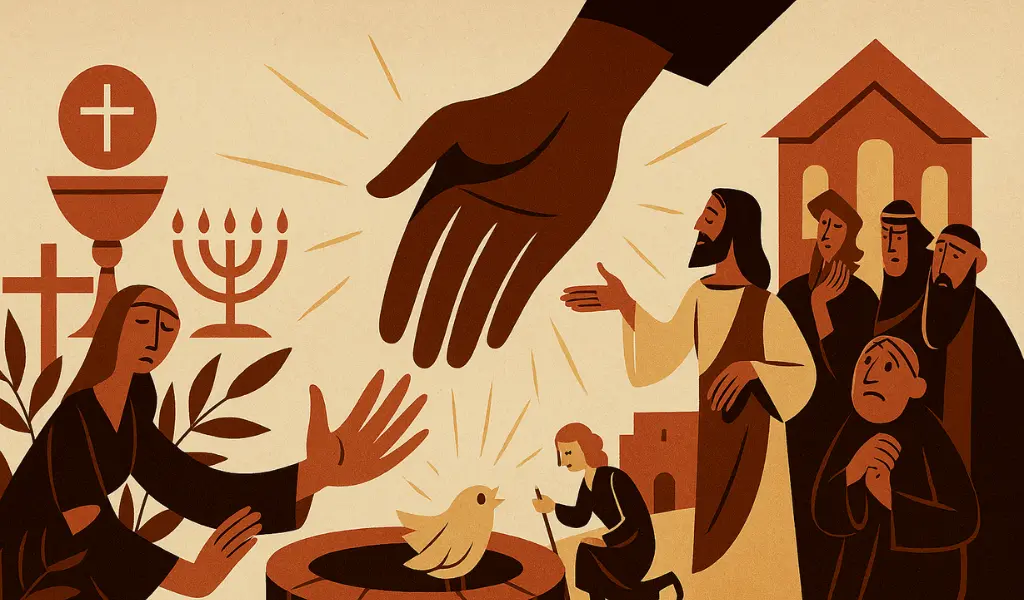
Jesus knew exactly what was happening. So He asked them directly: “Is it lawful to cure on the Sabbath or not?”
Complete silence.
They couldn’t say “yes” because that would contradict their strict interpretation of Sabbath law. They couldn’t say “no” because that would sound heartless. So they said nothing.
Their silence revealed everything. When you can’t answer whether it’s right to help someone who’s suffering, your heart has gone cold.
Jesus healed the man and sent him on his way. Then He asked another question that cut even deeper:
“Who among you would not pull out a son or an ox that fell into a well on the Sabbath?”
Again, silence. They knew He was right, but they couldn’t admit it.
These two questions expose the difference between religious performance and genuine faith: Do we care more about following rules perfectly, or about helping people who are hurting? You’d help your family or even your animals in an emergency, but you won’t help a stranger who’s been suffering for years?
The Pharisees had turned the Sabbath – which God designed as a gift of rest and freedom – into a burden of endless restrictions. They had hundreds of rules about what you couldn’t do on the Sabbath, but they’d forgotten why God gave it in the first place.
The original purpose of the Sabbath was beautiful:
But the religious leaders had turned it into:
When rules lose mercy, they wound instead of heal.
The Pharisees stayed silent when Jesus asked His questions. They knew He was right, but they were afraid to admit it because they’d look foolish, lose their reputation as religious experts, and have to change their whole system.
When fear silences truth, the needy wait at the door. How many hurting people have been turned away from churches because religious people were more worried about their reputation than about showing mercy?
Fear of what others think can make us complicit in others’ suffering.
Through His actions, Jesus showed what the Sabbath is really supposed to be:
The man with dropsy wasn’t just physically healed – he was restored to community, dignity, and hope. That’s what Sabbath rest looks like.
Piety without love is empty. The Pharisees were incredibly pious – they knew Scripture, followed religious practices, and looked spiritual. But Jesus called their piety empty because it lacked love.
Religious activities without compassion are just performance. All of God’s laws are meant to teach us how to love God and love others. When our religious practices don’t lead to greater love, something is wrong.
When faced with someone in need, ask yourself: What does this person really need right now? How can I show God’s love in this situation? What would Jesus do if He were here?
Don’t let religious rules become excuses for not helping. Sometimes the most spiritual thing you can do is break a religious rule to help someone.
The Pharisees were watching Jesus, waiting to criticize Him. But Jesus helped the man anyway.
Don’t let fear of judgment stop you from showing compassion:
What matters is what God thinks, not what the religious critics think.
Don’t just pray for people – become an answer to prayer:
God often answers prayers through people who are willing to act.
Every day we face the same choice the Pharisees faced: Will we choose compassion or compliance? Will we prioritize people or performance? Will we let love guide our decisions, or will we hide behind religious rules?
The sick man in this story represents everyone who needs healing – the person struggling with addiction, the family dealing with financial crisis, the individual battling depression, the couple whose marriage is falling apart.
Jesus still asks us: “Is it lawful to cure on the Sabbath or not?” In other words: Is it right to help hurting people, even when it’s inconvenient or might be misunderstood?
The answer should be obvious. But too often, like the Pharisees, we stay silent and do nothing.
Jesus didn’t just heal the man’s body – He restored his dignity and gave him freedom. We have the same opportunity every day: To help someone rise to freedom from whatever is holding them down.
Honor the Sabbath by healing. Honor God by loving. Stand with Jesus, and let someone rise to freedom.
The question isn’t whether it’s lawful to show mercy – the question is whether we’ll have the courage to act when mercy is needed.
Lord Jesus, help us remember that religious practices and moral standards exist to serve human flourishing rather than to become rigid systems that prevent compassionate response to genuine need. Give us wisdom to know when mercy should take precedence over rules, courage to act compassionately despite criticism, and humility to examine our own selective application of principles. Make our hearts tender toward suffering and our hands quick to heal, following Your example of Sabbath mercy. Amen.
❤️ Thank You dear friend, hope this reflections touched you. 🙏 Please do not forget to share with your loved ones this october 31 homily.
If you like Catholic Homily for october 31, 2025, do not forget to give your comment below. And please 🫂 join our whatsapp channel for everyday 🔔 update 👇👇👇
A warm homily on fraternal correction for the 23rd Sunday in Ordinary Time, Year A, with...
Read More →
Catholic Reflection for Sunday, 12 July 2026 — Listen to Reflection Your browser does not support...
Read More →
Catholic Homily for November 27, 2025 Thursday, November 27, 2025 Luke 21:20-28 We gather around tables...
Read More →Choose one simple response after prayerful reading.