
Saints Cosmas and Damian
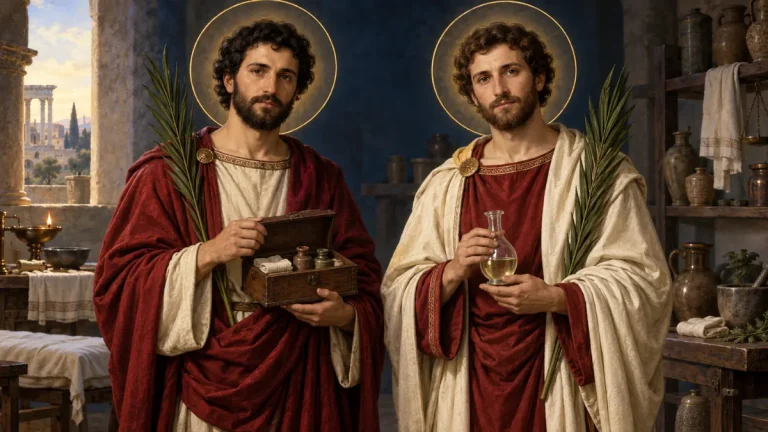
Saints Cosmas and Damian were Christian physicians who treated the sick without asking for payment. Their...
Read More →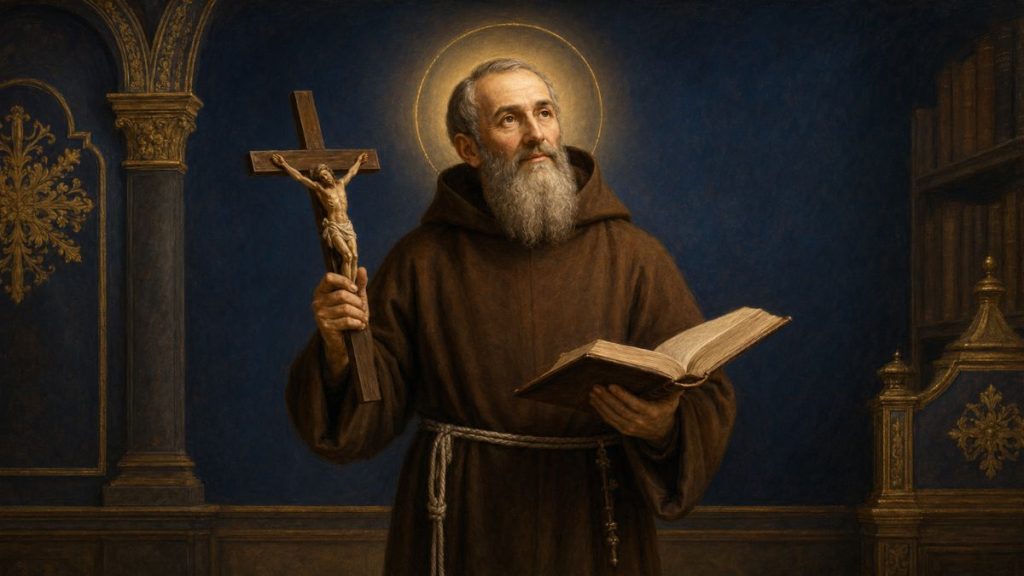
Imagine a man who could preach in a dozen languages, quote the whole Bible from memory, advise the most powerful rulers of Europe, and lead soldiers into battle holding nothing but a crucifix. That man was Saint Lawrence of Brindisi, one of the most brilliant and holy friars the Church has ever produced. His memorial falls today. Read today’s Catholic Daily Readings here.
Saint Lawrence of Brindisi was an Italian Capuchin Franciscan priest, preacher, diplomat, and Doctor of the Church. Born in 1559 in Brindisi, in southern Italy, he became one of the greatest preachers of his age. His feast day is 21 July.
Born Giulio Cesare Russo, Lawrence showed a remarkable mind from childhood. He lost his father young and was educated by the Conventual Franciscans and later in Venice. At sixteen he joined the Capuchins, a strict reform branch of the Franciscans, taking the name Lawrence.
Lawrence’s gifts were extraordinary. He mastered Latin, Greek, Hebrew, and several modern languages, and he came to know the Scriptures so deeply that he could reportedly recite long passages by heart, even quoting the Hebrew text to Jewish scholars. But he never let his brilliance become pride. He poured it all into preaching Christ.
Lawrence preached across Italy, Germany, Austria, and beyond, drawing huge crowds and bringing many back to the faith during the turbulent years after the Reformation. He held high office in his order and was sent on delicate diplomatic missions by popes and emperors. In 1601, when a Christian army faced the Ottoman Turks at Székesfehérvár, Lawrence rode ahead of the troops carrying only a crucifix, and the soldiers, emboldened, won the day.
For all his public triumphs, Lawrence’s true life was hidden in prayer. He had a tender devotion to the Eucharist and to the Blessed Virgin Mary, and he often wept while offering Mass. His vast learning always bent the knee before God. He is a shining example that intelligence and holiness belong together.
His preaching itself was regarded as miraculous in its power to convert hardened hearts. His vast writings, sermons, and biblical commentaries were later gathered into many volumes, and their depth led the Church to declare him a Doctor.
His feast day is celebrated on 21 July.
He is a patron of his home city of Brindisi and is honoured across the Capuchin order. In 1959, Pope John XXIII named him a Doctor of the Church, giving him the title “Doctor apostolicus,” the Apostolic Doctor.
He is usually depicted in the brown Capuchin habit, often holding a crucifix, recalling his famous ride into battle, or with a book, marking his learning and his title as Doctor of the Church.
Lawrence shows us that God can use every gift we have if we surrender it to Him. He never buried his brilliant mind or hid his talents. He offered them completely to Christ, and God multiplied them. Whatever you’re good at, your intelligence, your words, your skills, it becomes holy the moment you place it at God’s service.
Saint Lawrence of Brindisi, brilliant preacher and humble friar, you laid your great gifts at the feet of Christ and let God work wonders through them. Help me to offer all my talents to God without pride, and to love the Scriptures and the Eucharist as you did. Pray for me. Amen.
Saint Lawrence of Brindisi proved that a mind on fire with learning and a heart on fire with God are not enemies but friends. He remains a Doctor of the Church, teaching us still that the greatest use of any talent is to give it back to the God who gave it.
Share this saint’s story with someone who needs it, and read today’s readings to pray along. 🙏❤️🙏
Saints Cosmas and Damian were Christian physicians who treated the sick without asking for payment. Their...
Read More →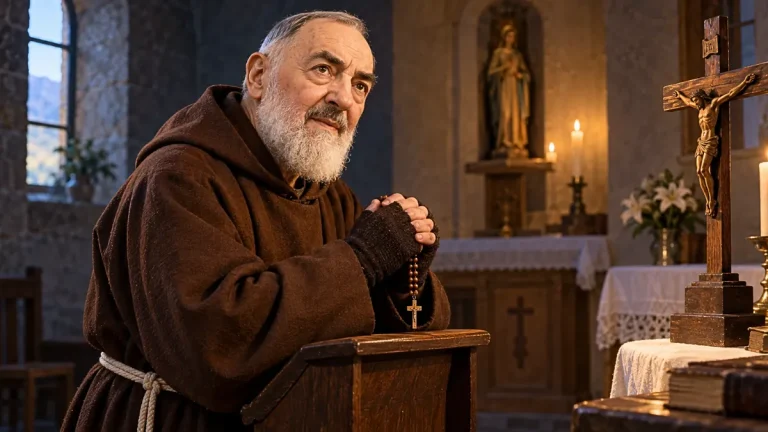
Saint Pio of Pietrelcina spent much of his life in one quiet friary, yet people travelled...
Read More →
Saint Matthew was sitting at his tax office when Jesus passed by and called him. One...
Read More →Choose one simple response after prayerful reading.