
Saints Cosmas and Damian
Saints Cosmas and Damian were Christian physicians who treated the sick without asking for payment. Their...
Read More →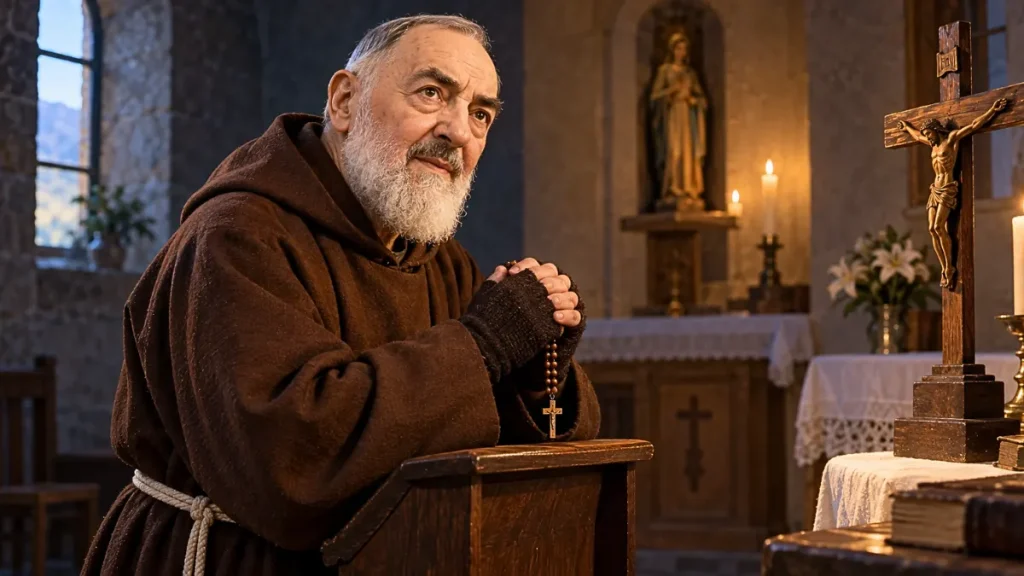
Saint Pio of Pietrelcina spent much of his life in one quiet friary, yet people travelled from across the world to seek his prayers, attend his Mass, and confess their sins. Better known as Padre Pio, he showed that a priest hidden with Christ can still bring light to millions. Read today’s Catholic Daily Readings here.
Saint Pio was born Francesco Forgione on 25 May 1887 in Pietrelcina, Italy. His parents were poor farmers whose Catholic faith shaped their family life. From childhood, Francesco showed a strong desire for prayer and the religious life.
He entered the Capuchin Franciscan Order as a young man and received the religious name Pio. He was ordained a priest in 1910. Because of poor health, his early years of ministry were often difficult, but suffering slowly became part of his offering to Christ.
In 1918, Padre Pio received the stigmata, wounds that reflected the wounds of the crucified Christ. He carried these wounds for many years. They brought physical pain, public attention, and careful examination by Church authorities.
Padre Pio did not treat the wounds as a reason for pride. He found the attention difficult and wished to lead people away from curiosity and toward Jesus. The deepest mark of Christ in his life was not what people could see on his hands. It was his patient obedience, prayer, and love for souls.
Two places stood at the centre of Padre Pio’s priesthood: the altar and the confessional. He celebrated Mass with deep attention and love. Those who attended often felt that Calvary had become close and that the sacrifice of Christ was not a distant memory.
He also spent long hours hearing Confessions. People came carrying years of sin, shame, and spiritual confusion. Padre Pio could be firm, but his purpose was conversion rather than humiliation. He wanted each person to make an honest Confession and begin again with God.
His life reminds us that the Sacrament of Reconciliation is not a court where a sinner is pushed away. It is a meeting with Christ the physician, who reveals the wound so that He may heal it.
Padre Pio understood that care for the soul must be joined with care for the body. He inspired the building of the Casa Sollievo della Sofferenza, the House for the Relief of Suffering, at San Giovanni Rotondo.
The hospital was meant to treat the sick with medical skill and human dignity. For Padre Pio, a suffering person was never merely a case or a number. Each patient carried the face of Christ.
Padre Pio’s life was not free from questions, limits, and investigations. At different times, restrictions were placed upon parts of his public ministry while Church authorities examined the unusual events connected with him.
These years were painful, but he remained within the Church and obeyed his superiors. His obedience did not remove the sorrow, but it protected him from making his gifts more important than Christ.
True holiness does not ask only, “What am I able to do?” It also asks, “Can I remain faithful when I am misunderstood?”
Saint Pio of Pietrelcina is officially honoured as a patron of civil defence volunteers in Italy. His care for those who suffered makes this patronage especially fitting.
Many Catholics also seek his intercession during illness, anxiety, spiritual struggle, and times of stress. He is loved by priests, confessors, healthcare workers, penitents, and people carrying heavy crosses.
Padre Pio often encouraged troubled souls with the simple advice to pray, hope, and not give way to worry. This was not a denial of pain. It was an invitation to place pain inside the hands of God.
Padre Pio died on 23 September 1968 at San Giovanni Rotondo. His feast is celebrated each year on the anniversary of his death.
Pope Saint John Paul II beatified him in 1999 and canonized him on 16 June 2002. The priest who had spent years hearing sinners confess their need for mercy was now presented to the whole Church as a witness to the mercy of Christ.
Padre Pio teaches us that prayer is not an escape from life. Prayer gives us strength to face life with Christ. He also reminds us not to hide from Confession. The sins we bring honestly to Jesus can become the place where healing begins.
Most of us will never carry visible wounds like Padre Pio. Yet many carry wounds hidden beneath a smile. His life asks us not to waste them through despair. When suffering is united with the Cross and offered in love, it can become prayer for another soul.
Holiness is not found in searching for unusual signs. It is found in remaining close to the Eucharist, returning to Confession, obeying God in difficult moments, and seeing Christ in those who suffer.
Lord Jesus, You gave Saint Pio of Pietrelcina a deep love for the Eucharist, Confession, and those who suffer. Through his prayers, strengthen me when I am afraid, lead me back when I sin, and help me offer my wounds with Your Cross. Make me patient in suffering, faithful in prayer, and generous toward those in pain. Saint Pio of Pietrelcina, pray for us. Amen.
Which part of Padre Pio’s life speaks most strongly to you: prayer, Confession, suffering, or care for the sick? Share your answer in the comments. Your witness may strengthen someone carrying a hidden cross. Read today’s Catholic Daily Readings. 🙏
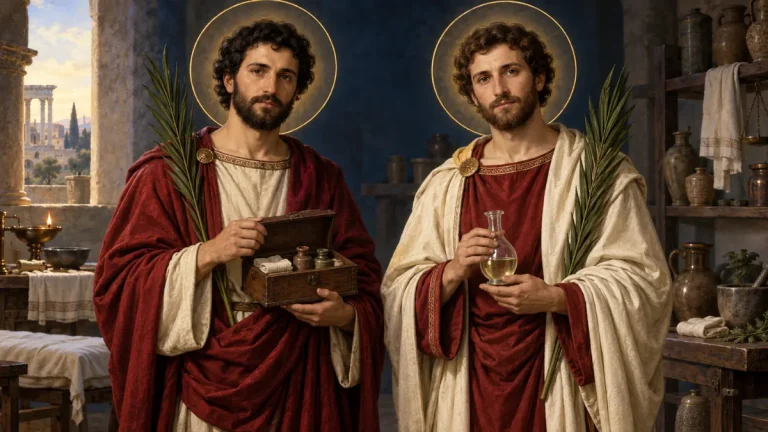
Saints Cosmas and Damian were Christian physicians who treated the sick without asking for payment. Their...
Read More →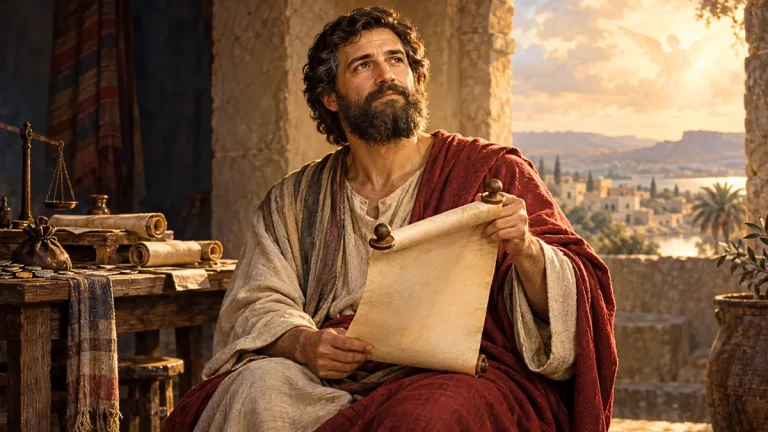
Saint Matthew was sitting at his tax office when Jesus passed by and called him. One...
Read More →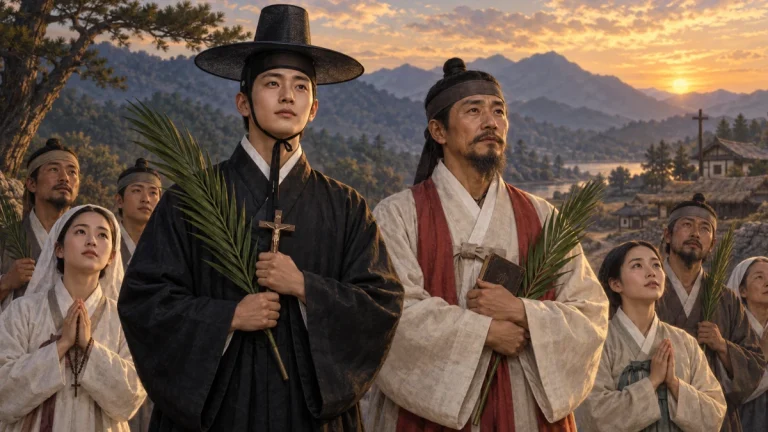
The Korean Martyrs show what can happen when ordinary people treasure Jesus more than safety, comfort,...
Read More →Choose one simple response after prayerful reading.