Catholic Homily for October 25, 2025
Are You a Disaster Tourist or a Heart Surgeon?
Saturday of the Twenty-Ninth Week in Ordinary Time
Luke 13:1–9
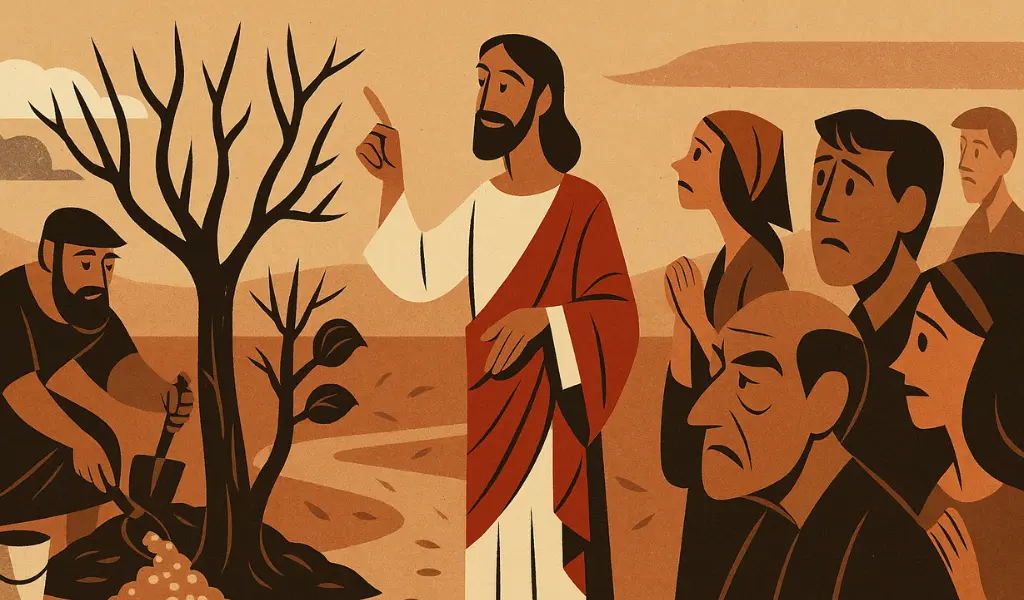
People rush up to Jesus with the latest tragic headline. Pilate had just killed some Galileans while they were offering sacrifices in the temple. Blood mixed with holy offerings. Innocent worshippers murdered during prayer.
You can almost see the crowd gathering, hungry for Jesus’ reaction:
- “What do you think about this, Rabbi?”
- “Were they being punished for something?”
- “Why do bad things happen to people trying to worship God?”
It’s the same energy that makes us scroll through disaster videos on social media or rubberneck at car accidents. We’re fascinated by other people’s tragedies.
But Jesus does something completely unexpected.
Instead of analyzing the politics or theology of the situation, He brings up another recent tragedy – the tower of Siloam that collapsed and killed eighteen people. Then He drops a bomb:
“Do you think these Galileans were worse sinners than all other Galileans? No, I tell you. And those eighteen who died when the tower fell – do you think they were more guilty than everyone else in Jerusalem? No, I tell you. But unless you repent, you will all perish.”
Wait – what just happened?
We came for gossip. Jesus gives us a mirror.
We wanted to discuss their sins. He confronts us with our own.
We asked “Why them?” He asks “What about you?”
The Questions We Love Asking:
- “What did they do to deserve this?”
- “Are they worse sinners than us?”
- “Why doesn’t God protect good people?”
- “What’s the theological explanation for suffering?”
The Question Jesus Actually Asks:
- “Are you ready to meet Me?”
Jesus takes our morbid curiosity about other people’s disasters and transforms it into an urgent call for personal transformation.
It’s brilliant and terrifying at the same time.
The Parable That Changes Everything: The Useless Fig Tree
To drive His point home, Jesus tells one of His most unsettling parables:
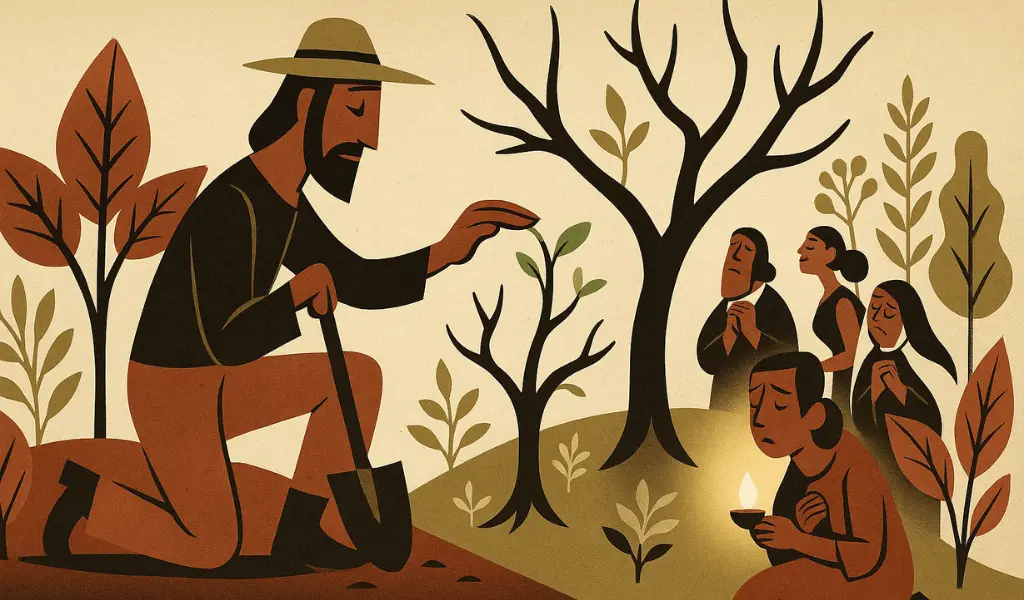
“A man had a fig tree planted in his vineyard. For three years he came looking for fruit and found none. So he said to the gardener, ‘Cut it down! Why should it waste the soil?’ But the gardener replied, ‘Sir, leave it alone for one more year. Let me dig around it and fertilize it. If it bears fruit next year, fine. If not, then cut it down.'”
Here’s What This Story Reveals:
Every element of this parable is loaded with meaning:
The Fig Tree = You
- Planted in good soil (God’s grace)
- Given everything needed to thrive
- Expected to produce fruit
Three Years = Plenty of Time
- Not a rush to judgment
- Multiple growing seasons
- Reasonable expectation of results
The Owner = God’s Justice
- Has every right to expect fruit
- Justified in wanting to cut down useless trees
- Not being unreasonable or impatient
The Gardener = God’s Mercy
- Advocates for one more chance
- Offers to do extra work
- Provides additional care and nutrients
God is Patient, Not Stupid
This parable reveals something crucial about God’s character that we often misunderstand:
God’s Patience Has a Purpose:
- It’s not indifference to our failures
- It’s not permission to keep failing
- It’s an opportunity for transformation
God’s Mercy Comes with Expectations:
- He gives us time to change
- He provides what we need to grow
- But He expects actual results
There’s a Limit to Second Chances:
- “One more year” – not endless years
- Additional care and attention
- But if there’s still no fruit, judgment comes
God’s patience is generous, but it’s not infinite. Every day of grace is a gift, not a guarantee.
The Gardener’s Secret: How Spiritual Fruit Actually Grows
The gardener in the parable does two specific things to help the tree: dig around it and add fertilizer. These aren’t random garden tips – they’re the exact prescription for spiritual growth:
Digging = Prayer That Breaks Hard Ground
Just like soil gets compacted over time, our hearts get hard:
Prayer is like spiritual digging:
- It breaks up the hardened places in our hearts
- It creates space for God’s influence
- It makes us vulnerable enough to change
Fertilizer = The Humble Means That Feed Growth
Fertilizer isn’t glamorous, but it’s what makes things grow. In the spiritual life, the “fertilizer” includes:
The Sacraments:
- Confession that clears away spiritual waste
- Eucharist that provides ongoing nourishment
- The grace that comes through humble participation
Scripture:
- Daily reading that feeds the soul
- God’s Word taking root in daily decisions
- Biblical wisdom shaping how we think
Daily Sacrifice:
- Small acts of self-denial that build spiritual muscle
- Choosing what’s right over what’s comfortable
- The disciplines that nobody sees but God
None of this is exciting or dramatic. But it’s what actually produces spiritual fruit.
What Real Spiritual Fruit Looks Like
Jesus isn’t talking about feeling religious or having good intentions. He’s talking about fruit that people can actually see:
In Your Family:
- Patience where there used to be irritation
- Generosity where there used to be selfishness
- Forgiveness where there used to be grudges
In Your Work:
- Integrity where there used to be corner-cutting
- Kindness where there used to be indifference
- Excellence where there used to be laziness
In Your Community:
- Service where there used to be self-focus
- Compassion where there used to be judgment
- Peace-making where there used to be conflict
If your spiritual life isn’t producing visible changes in how you treat people, it’s decoration, not transformation.
Three Concrete Steps for Your “One More Year”
Based on this parable, here are three specific ways to cooperate with the Gardener’s work:
1. Name One Sin and Confess It (Stop Wasting Soil)
Get specific about what’s wrong:
- Not “I’m not perfect” but “I gossip about my coworkers”
- Not “I have issues” but “I look at pornography”
- Not “I struggle” but “I lie about money to my spouse”
Then confess it properly:
- If it’s serious, go to a priest
- If it’s interpersonal, apologize to the person you’ve hurt
- If it’s habitual, make a concrete plan to change
2. Add One Hidden Discipline (Let the Gardener Dig)
Choose one spiritual practice that will break up hard ground in your heart:
- Five minutes of silent prayer every morning
- Reading one chapter of Scripture before bed
- Fasting from lunch once a week
- Praying the rosary on your commute
3. Do One Concrete Act of Charity (Produce Actual Fruit)
Look at where your life has been barren and do something loving:
- If you’ve been stingy, make a generous donation
- If you’ve been cold to family, plan something special
- If you’ve avoided difficult people, reach out to them
- If you’ve been too busy for service, volunteer somewhere
The goal isn’t to do one good deed and check it off. The goal is to start a pattern of fruit-bearing that continues.
Two Things That Will Kill Your Progress
1. Comparison Shopping (“At Least I’m Not…”)
Jesus demolishes this excuse before we can even make it:
- “They weren’t worse sinners”
- Your spiritual grade isn’t curved against other people’s performance
- The question isn’t whether you’re better than them
- The question is whether you’re producing fruit
2. Endless Delays (“Someday I’ll Get Serious About This”)
The gardener asked for “one more year,” not “several more decades when I feel ready”:
- Every day you delay, your heart gets a little harder
- Every opportunity you miss might be the last one
- The people around you need the fruit your life should be producing
If you’re going to change, start this week. The Gardener is ready to work – are you ready to cooperate?
October 25, 2025: The Beautiful Promise
The Gardener advocates for the tree. God doesn’t want to cut you down – He wants to help you grow.
But He won’t do the growing for you:
- He’ll provide the grace (digging and fertilizing)
- You have to receive it and respond to it
- The fruit has to come from your choices
God is more invested in your spiritual success than you are. But He won’t force it. The choice to bear fruit is yours.
The choice is simple: Will you spend your time analyzing other people’s disasters, or will you finally get serious about bearing fruit in your own life? The Gardener is ready to work. Your “one more year” starts now.
A Prayer for Fruit-Bearers
Jesus, when I hear about other people’s tragedies, help me stop being a disaster tourist and start being honest about my own spiritual condition. Thank you for Your incredible patience – for giving me more chances than I deserve. Help me cooperate with Your grace. Dig up the hard places in my heart through prayer, nourish my soul through the means You’ve provided, and help me finally produce the fruit You’re looking for. Don’t let me waste another year. Make my life count. Amen.
❤️ Thank You dear friend, hope this reflections touched you. 🙏 Please do not forget to share with your loved ones this october 25 homily.
If you like Catholic Homily for october 25, 2025, do not forget to give your comment below. And please 🫂 join our whatsapp channel for everyday 🔔 update 👇👇👇