Catholic Homily for September 24, 2025
“What if the secret to freedom wasn’t in carrying more, but in letting go? Jesus’ command to His disciples—‘Take nothing for the journey’—challenges us to trust radically, live lightly, and discover the joy of walking by faith, not fear.”
Trust Big To Travel Light
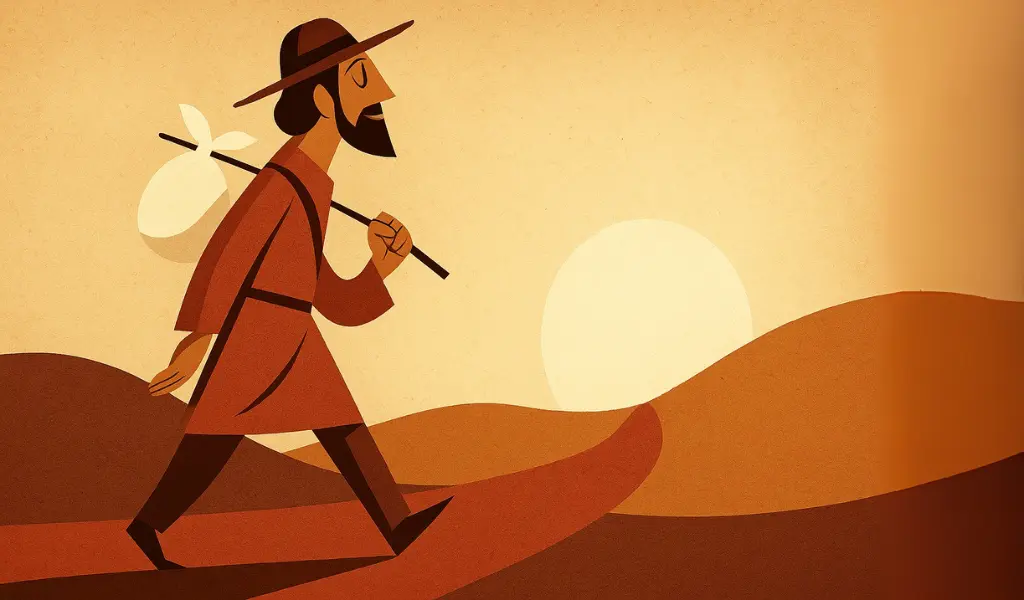
A young man once decided to walk the Camino de Santiago, the famous pilgrimage in Spain. He packed everything he thought he might need—extra clothes, gadgets, even canned food. Within two days, he was exhausted. His shoulders ached, his feet blistered. One night he collapsed into a small hostel along the way, frustrated and ready to quit.
The owner, an elderly pilgrim himself, looked at his heavy pack and said simply, “You’re not walking with faith; you’re walking with fear. Let go of what you don’t need, and you’ll find the strength to finish.”
The young man reluctantly shed much of his baggage. The next morning, he walked lighter, freer, and surprisingly joyful. What changed? Not just his backpack—his trust.
That story captures today’s Gospel perfectly. Jesus sends His disciples with nothing but faith and mission.
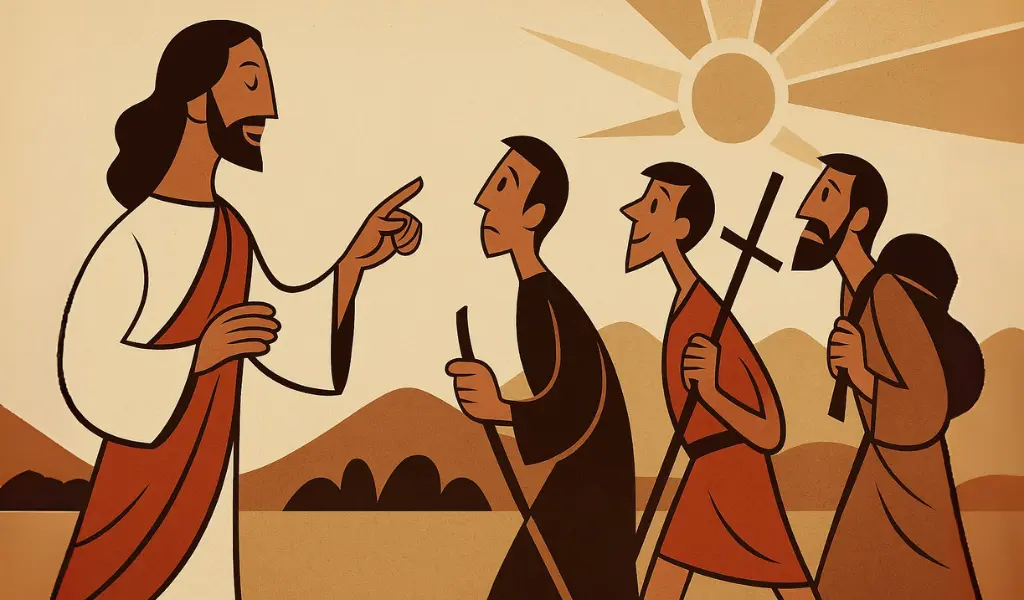
Jesus gathers the Twelve and gives them authority to heal and proclaim the Kingdom of God. Then He instructs them: “Take nothing for the journey—no staff, no bag, no bread, no money, no extra tunic.” They are to rely completely on God’s providence and the hospitality of others.
This passage emphasizes two key truths:
- Mission flows from Jesus’ authority, not our own strength. The disciples were ordinary men, yet Jesus empowered them.
- Radical trust is necessary. By traveling light, they depended entirely on God’s care and the generosity of others.
The Gospel reminds us that discipleship is not about clinging to security but about courageously living in faith.
This theme of radical trust and reliance is woven throughout Scripture.
- In Exodus, the Israelites journeyed through the desert with manna from heaven—daily bread, not stockpiles (Exodus 16). God wanted them to trust day by day.
- In Psalm 23, David declares, “The Lord is my shepherd, I shall not want.” The image is not of abundance stored away but of daily guidance.
- The prophets often traveled light, depending on God’s word. Elijah was fed by ravens and later by a widow in Zarephath (1 Kings 17).
In the New Testament, Jesus reinforces this in the Sermon on the Mount: “Do not worry about tomorrow… Seek first the kingdom of God and His righteousness, and all these things will be given you besides” (Matthew 6:33-34).
The connection is clear: God calls His people to walk in trust, not fear.
St. Francis of Assisi lived this passage literally. Stripping himself of possessions, he walked barefoot, trusting completely in God’s providence. His simplicity attracted countless followers because it revealed freedom and joy.
St. Ignatius of Loyola instructed his missionaries to embrace poverty so that they could rely on divine providence, not wealth. He wrote: “He who carries God in his heart bears heaven with him wherever he goes.”
Padre Pio, whose feast we celebrated yesterday, also emphasized trust: “Pray, hope, and don’t worry.” His words echo Christ’s call: let go of burdens, and walk in faith.
The Church has always taught that detachment from material things is not misery but liberation. Possessions can weigh us down, but trust in God lifts us up.
Living the Gospel in Daily Life
This Gospel is not only for missionaries or saints—it is for every Christian.
- In family life, Jesus invites us to walk lighter. Many parents carry unnecessary anxieties about the future. While planning is wise, trust is essential. Raising children in faith is not about perfect control but about reliance on God’s grace.
- At work, we may be tempted to measure our worth by salary, titles, or possessions. But today’s Gospel reminds us: our true security is not in a paycheck but in God’s providence.
- In personal struggles, Jesus calls us to let go of baggage—resentment, fear, or self-reliance—and to lean on Him. Sometimes our heaviest burdens are invisible, carried in the heart.
Living this Gospel means we ask ourselves daily: What do I truly need, and what am I carrying out of fear?
Challenge from Today’s Gospel
Jesus’ command is challenging: “Take nothing for the journey.” It is not just a practical instruction but a spiritual warning. If we cling too tightly to material security, we may miss the joy of trust.
The danger is subtle: possessions are not evil, but they can become distractions or false gods. Jesus warns elsewhere: “Where your treasure is, there your heart will be also” (Luke 12:34).
The challenge for us is clear: Am I traveling through life with a heavy pack of fears and possessions, or am I walking with the lightness of faith?
Today’s Prayer
Lord Jesus, You sent Your disciples with nothing but trust in You. Teach me to let go of what I do not need and to walk with faith. May I find my strength not in possessions but in Your presence, and may I proclaim Your Kingdom with courage and joy. Amen.
❤️ Thank You dear friend, hope this reflections touched you. 🙏 Please do not forget to share with your loved ones. 🫂And please join our whatsapp channel for everyday update.
If you like Catholic Homily for september 24, 2025, do not forget to give your comment below.